Archive for the ‘Natural Gas’ category

Renewable Energy in the Era of Rising U.S. Oil and Gas Production

November 7, 2012

Dramatic increases in natural gas and oil production in the U.S. have increased the nation’s prospects for energy independence.  Increases in oil and gas production are good news for the U.S. economy and consumers, but one unfortunate result could be reduced efforts to increase the nation’s production of energy from renewable sources.   High oil and gas prices, as painful and harmful economically as they are,  spur development of renewable sources of energy.  I couldn’t be more enthusiastic about the positive implications of increased domestic oil and gas production but my enthusiasm is tempered by the prospect of a stalling emphasis on developing  renewable energy sources.   Northern New England states are above the U.S. average for electricity generated by renewables, with Maine being a national leader at 56% of it electricity generation.  Vermont is at 25% and NH 14% (each of these states generates a large percentage of electricity from nuclear fuel while Maine does not).
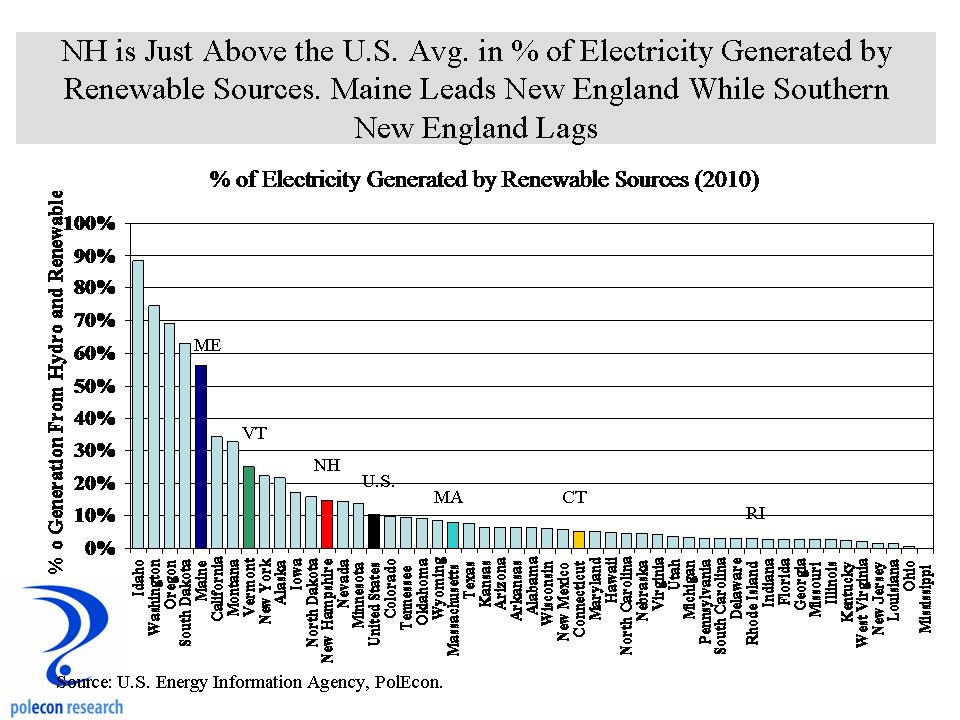
Southern New England states lag in electricity generated from renewable sources of energy, and as the chart below shows, have a long way to go in meeting their goals for the percent of electricity generated by renewable resources – even when the goals are modest.

The Disconnect Between the Cost of Generating Electricity and Retail Prices

October 24, 2012

It is hard for consumers of electricity to understand why retail prices are what they are and how they are determined.  It is beyond one blog entry to fully describe the process but in overview, the suppliers  of electricity (generating companies) in a region offer to supply electricity to the market at a given price and the offers are accepted beginning with the lowest cost providers first, until enough energy is supplied to meet expected demand in the region.  The price of electricity offered by the last electricity generator needed to meet the regional demand determines the market price paid by companies that supply the electricity to businesses and consumers.  Retail prices are a function of the market price of electricity, plus many other costs such as transmission, special infrastructure charges, and profits by suppliers, among others.  Much of these costs are determined at the state level by regulators, as well as the characteristics of the retail electricity market in the state (competition) and the practices and policies of the companies that supply electricity to retail markets.

The end result is that retail prices for electricity in any state bear only a limited relationship to the cost of generating electricity in the state.  The chart bellow shows that the cost to generate 1 million BTUs of electricity in New Hampshire is about in the middle of all 50 states.  Vermont is also relatively low.  Both states have a relatively lower generating cost per million BTUs because a significant portion of the electricity produced in their state is from nuclear generators.

The correlation between the fuel costs to generate electricity in a state and retail prices per 1 million BTUs is modest, explaining less than one-third of the price per million BTU at the retail level.  The chart below show that despite fuel costs that are in the middle of the pack,  NH, VT and CT have high retail prices per million BTU of electricity.   The regional nature of electricity markets along with the policies of state governments and the actions of individual retail sellers of electricity all play a role in disconnect between costs for generating electricity  and prices at the retail level.  We don’t have much control over the  supplies of electricity beyond our state but we do have some control over the mix of suppliers of electricity which determine the cost of fuel for generation and we have a lot of control of the structure of retail markets and many other factors that determine the non-generating costs of electricity in the state and ultimately prices at the retail level.

Burn More Gas to Burn Fewer Dollars

October 15, 2012

The National Oceanic and Atmospheric Administration is forecasting over 20 percent more heating degree days for East of the Rockies and depending on your fuel, heating costs could be up by as much as 19%  over last year (if you heat with oil).  That’s bad news for the almost 50% of NH households that heat with oil  (compared to just 6% nationally).

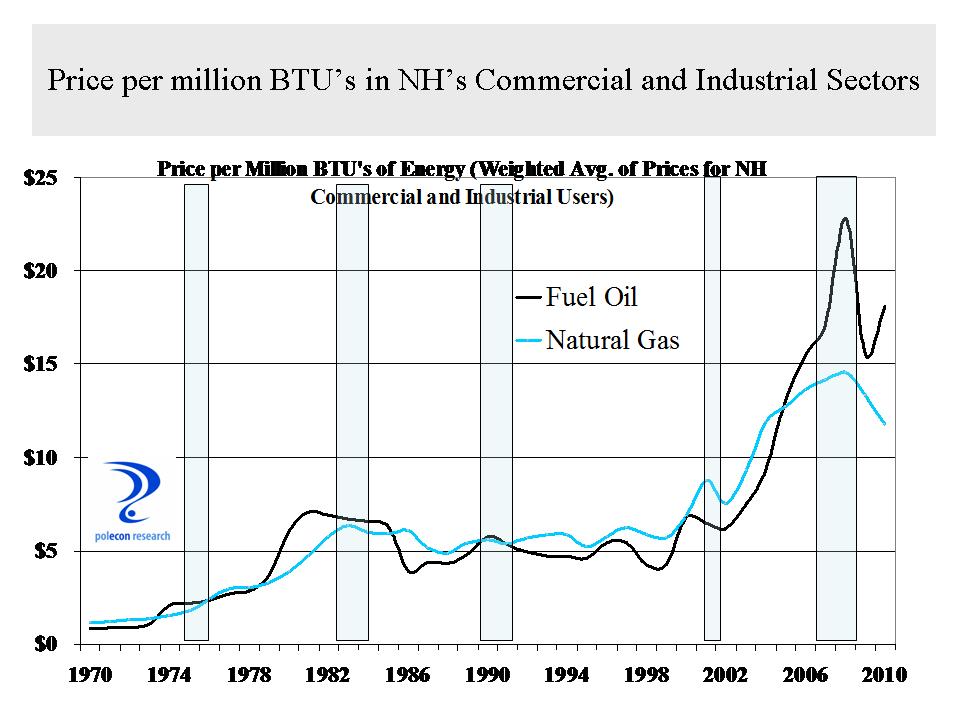
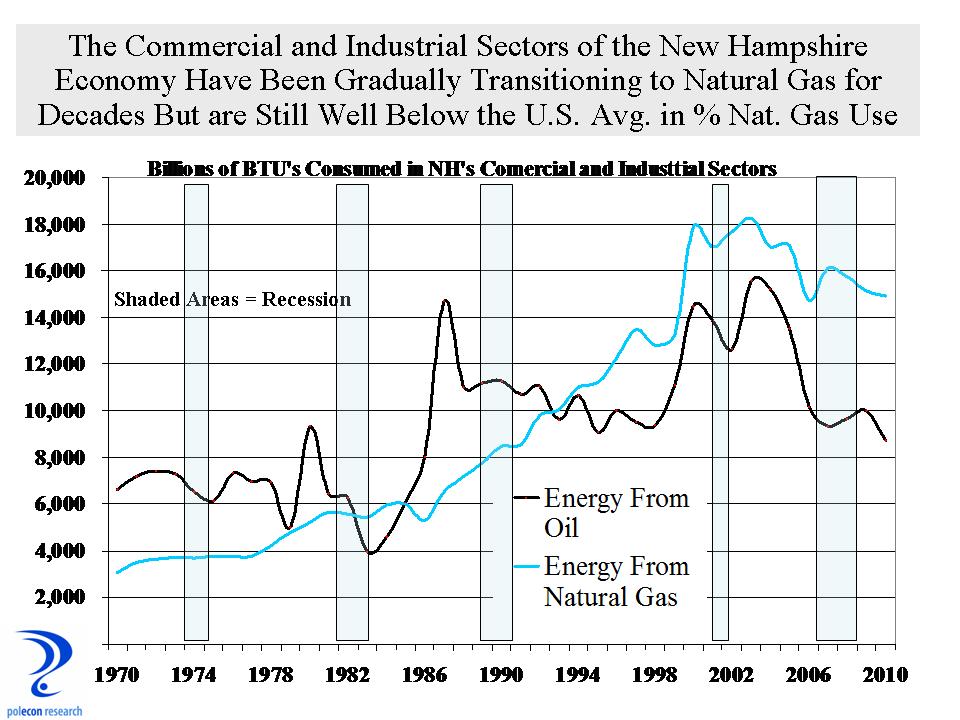
The growing disparity between oil and natural gas prices during the past decade ( graph above) has led to greater use of natural gas in the commercial, industrial, and electric industries in NH and elsewhere,  but NH still lags in natural gas usage as a percentage of all energy use in the state.

That is unfortunate because later this decade growth in domestic supply of natural gas (led by dramatic increases in the supply of shale gas) is forecast by the U.S. Energy Information Agency to outstrip growth in demand.  Prices, although expected to rise gradually, are still forecast to be lower in 2035 than they were in 2005.

Stable natural gas prices should make investment in natural gas conversions more attractive to NH  households. Lending programs by NH banks and credit unions, directed at energy efficiency,  could facilitate that.  But it is in transportation that conversion to natural gas could have the biggest impact on NH’s and the nation’s energy expenditures and our need for oil imports.  The last time I checked, however,  there were no dealerships in NH offering the one natural gas powered passenger vehicle produced by major auto manufacturers, there are less than a dozen natural gas “filling stations” in the state, and there are no rules and regulations in place for homeowners to make use of the natural gas lines to their homes by installing already commercially available residential natural gas auto refilling equipment.